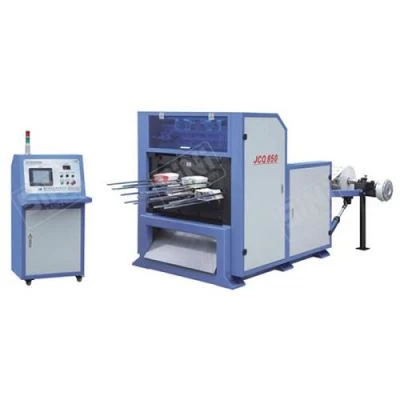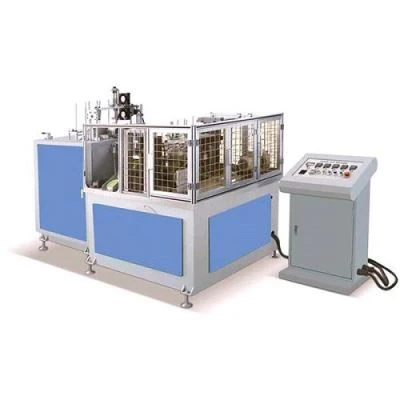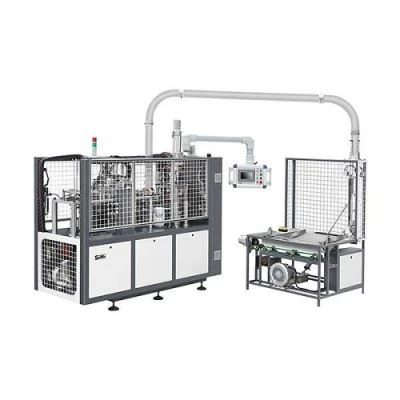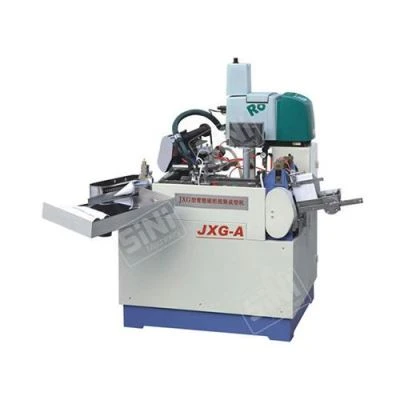
In continuous production process, when paper drift, will directly affect the die position, product dimensions and the consistency of the finished product. In severe cases, it can lead to paper creasing, damaged edges and even equipment downtime. For purchasers and operators, it is important not only to know how to adjust the equipment, but also to determine the root cause of the drift --whether from the feed system, tension, guidance mechanisms, die-cutting device or the material itself. Below is an analysis of common causes and solutions from the point of view of actual production.
1.Check the initial installation position of the paper roll
When paper drifts, first check that the paper roll is installed correctly. If the roller is not focused on the machine, or if the tension is not uniform across the width of the machine, the paper may gradually shift to one side as the device runs.
During installation, make sure that the center of the paper roll is in line with the feeding center of the machine and check that the end of the roll is smooth. Such as significant eccentricity, loose winding, or uneven edge rollers themselves may also lead to lateral shifts in the feeding process.
Therefore, correctly locating the paper roll is the first step in minimizing drift issues before production begins.
2.Adjusted feed systems and guidance devices
Paper feeder plays a crucial role in determining the route of paper feeder. If guide rollers, web-guiding (edge-alignment) systems or guide wheels are not adjusted properly, the paper may begin to shift before reaching the die-cutting area.
You can run the machine at low speed to observe how the paper tracks as it passes each guide roller. If the paper begins to shift at a certain point, inspect the guidance gaps, the parallelism of the roller, and the mounting position of the positioning.
The steering device must also be adjusted to accommodate rolls of paper of different widths. Reliance on a single, fixed configuration for all roll widths may result in uneven lateral forces applied to paper.
3.Check if feeding tension is uniform;
Unstable tension is a common cause of webbing in continuous webbing. Too much tension in the paper can cause the material to stretch, altering its width or operating characteristics; instead, too little tension can cause it to relax, sway or wrinkle. During high-speed production, these tension fluctuations can become particularly noticeable.
Therefore, the paper feed tension should be adjusted according to the thickness and width of the paper roll and the speed of operation of the equipment to ensure a smooth, continuous flow of paper.
If the device is equipped with an automatic tension control system, verify that tension sensors, controller and associated actuators are working properly.

4.Check if the Guide Rollers are parallel
In the process of continuous paper feed, even if there is a slight deviation in parallelism between guide rollers, the paper will gradually tilt to one side.
Check the mounting height and axial positioning of both ends of the guide rollers to ensure that they are not tilted, loose or abnormally worn.
In addition, paper, adhesive residue or other debris accumulated on the surface of the guide roller will create uneven friction on the width of the paper. Therefore, in the production process, should regularly clean the roller surfaces in direct contact with the paper.
5. Check the paper itself for Issuess
Not all material drift is caused by equipment. In some cases, the paper roll themselves may have quality or processing defects that prevent stable paper entry.
Examples include:
-Irregular or uneven edges;
Uneven winding of paper roll;
-Inconsistent material thickness;
Paper the paper's moisture content varies greatly;
-Uneven tension in roller (tight and loose spots);
-Material is deformed during transport.
If the drift issue improves significantly after switching to another volume of material, the raw material should be investigated rather than just focusing on adjusting the die-cutting machine.
6.Adjusting Die Cutting Speed and Incremental Adjustments Calibration
The likelihood of paper paper drift increases when the device operates at super-high speed before the feed, tension control and guidance systems reach a stable state.
If drift occurs, try to the machine's operating speed down and observe if the paper returns to a stable state. If the machine operates normally at low speed, but shows obvious deviation at high speed, the tension control, feed synchronization and guidance systems should be inspected.
From a supplier's perspective of view, when debugging new equipment or switching to a different size of paper roll, it is recommended to start with a low speed test run and then gradually increase production speed, rather than starting directly at the fastest speed.
7.Synchronization of Die Cutting Mechanism and Feeding System
If only in the paper into the die-cutting area before major deviation, then must check the die-cutting mechanism and paper feed system coordination.
Feed length, die-cutting cycle and equipment running speed do not match, paper in the die-cutting process will produce abnormal tension, thus affecting the accuracy of die-cutting position.
Therefore, in addition to checking the drift of paper, you should also observe whether the position of the die-cut pattern or cutting line relative to the edge of the paper changes over time. If the degree of deviation increases as production continues, feed and synchronous control systems should be the main focus of inspection.
8.Develop routine inspection and Maintenance Protocol
For rolling die cutting machines used in long continuous production, components related to paper alignment should be included in the routine maintenance schedule.
Before starting production, check the following:
Roller positioning → Guide rollers → Tension system → guide mechanism → Feed system → diecutting mechanism.
During production, the paper is monitored to ensure its stability and to remove any paper paper debris from the guide rollers and feed components in a timely manner.
If the device requires frequent manual adjustments to maintain it in the right alignment, don't just rely on these interventions; instead, investigate whether the mechanical components show signs of wear, loosening or installation errors.
Frequently Asked Questions
Question 1: What are the most common reasons for paper deviation in a rolling die cutter?
Common reasons include improper installation of paper roll, improper adjustment of guide device, uneven feed tension, guide rollers is not parallel, paper quality problems.
Q2: Can reducing the speed of die-cutting machines solve paper deviation?
It may offer some improvements, but the reduction in speed is primarily a diagnostic method. If there is a large deviation at high speed, the tension, feed synchronization and guidance systems should be thoroughly inspected.
Q3: Why is it that paper runs well at first, but starts to go awry after a period of production? This may be related to uneven winding of the material, gradual change in tension, abrasion of guide rollers or mechanical deviation after continuous operation of the equipment; the exact location and time of the deviation must be observed.
Question 4: What should be done if the material continues to deform after the roll is replaced?
If problems persist after switching to another material roll, the focus should shift to inspecting the feeding system, the parallelism of the guide rollers, the guide (alignment) mechanism and the die-cutting device, rather than continuing to adjust the raw material itself.
Question 5: How to minimize material deviations during roll die-cutting?
It is suggested that comprehensive control should be carried out in such aspects as material roll positioning, tension control, guide guidance adjustments, guide roller maintenance, equipment synchronization and so on, and production parameters should be adjusted according to the specific specifications of paper.