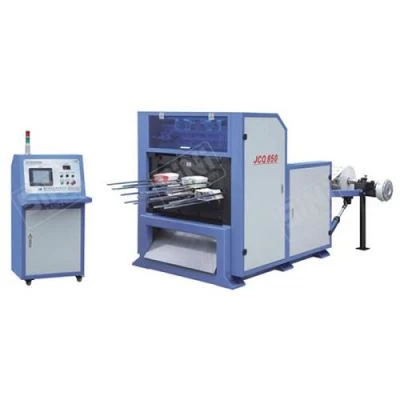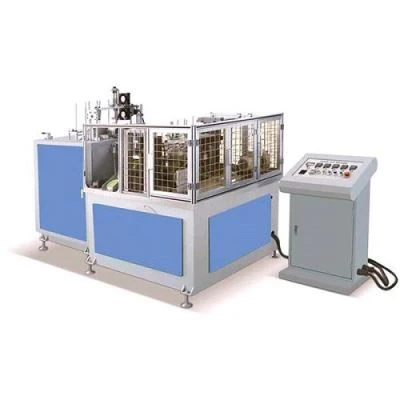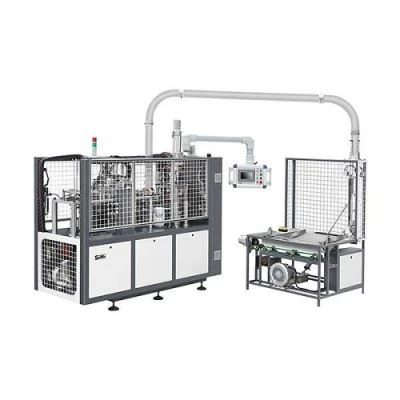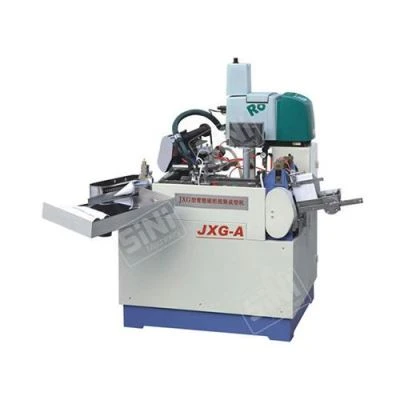
Selecting the appropriate die-cutting machine for roll-fed materials requires a comprehensive evaluation of factors such as the width of the paper roll, the dimensions of the finished product, the die-cutting layout, material thickness, and production speed. A mismatch between equipment specifications and actual processing requirements can lead to material waste, insufficient die-cutting precision, or reduced production efficiency. For companies in packaging, printing, paper product manufacturing, or label production, clearly defining the specifications of the paper rolls and the dimensions of the finished products-before determining the equipment's effective processing width and die-cutting capacity-is a critical step in the procurement process.
1. Determining the Effective Processing Width Based on Paper Roll Width
The width of the paper roll is the primary parameter to verify when selecting a die-cutting machine. The equipment's effective processing width must accommodate the actual width of the paper roll, while also allowing for necessary edge margins to ensure the paper is not restricted during feeding and die-cutting.
For instance, if the production process utilizes a 500 mm wide paper roll, it is essential to confirm that the equipment can reliably process material of this width-relying solely on the machine's external dimensions or maximum installation width is insufficient.
During procurement, it is advisable to focus on the following parameters:
- Maximum Infeed Width: The maximum width of the roll material the equipment can handle.
- Effective Die-Cutting Width: The actual width available for the die-cutting process.
- Maximum Roll Diameter: The largest diameter of a paper roll that the equipment can accommodate.
- Feeding Stability: The equipment's ability to maintain consistent, smooth material feeding at the required width.
From a supplier's perspective, if a client anticipates processing paper rolls of varying widths in the future, the equipment's versatility regarding width should also be considered to avoid limitations when switching to different products later.
2. Determining the Die-Cutting Layout Based on Product Dimensions
The dimensions of the finished product directly dictate the layout of the die-cutting tools and determine the number of units that can be produced in a single die-cutting cycle.
For example, if the paper roll is 600 mm wide and the product is a 100 mm wide rectangle, one might theoretically fit six units across the width (excluding edge margins and the spacing between cutting lines). In actual production, however, one must account for the gaps between products, the width of the cutting lines (kerf), edge margins, and overall material utilization; consequently, the actual number of units per layout may be lower than the theoretical maximum. When determining the layout (imposition) strategy, consider the following:
1. The dimensions (length, width) and shape of the finished product;
2. The required spacing (gap) between products for die-cutting lines;
3. The number of units arranged horizontally and vertically;
4. The structure of the die-cutting tools and any processing limitations;
5. Methods for waste removal and subsequent rewinding.
An optimized layout improves material utilization, reduces scrap, and increases output per unit of time.

3. Selecting equipment based on die-cutting area and material thickness
Beyond web width and finished product dimensions, material thickness and the total die-cutting area are critical factors in equipment selection.
Different types of paper, composite materials, and label stocks vary significantly in terms of stiffness, ductility, and resistance to die-cutting. Thicker or more complex materials may require specific die-cutting pressures, specialized tool configurations, and higher equipment rigidity.
Before procurement, provide the supplier with details such as material type, thickness range, and the presence of any coatings, adhesives, or composite layers.
Note that the maximum processing width does not guarantee the equipment can handle all material thicknesses. Always verify the equipment's specific die-cutting capacity, tooling configuration, and the range of compatible materials.
4. Selecting equipment based on production speed and order volume
For long-term, high-volume production, the equipment's continuous operational capability is just as important as its production speed.
For instance, operations involving small batches and diverse specifications prioritize efficiency in job changes, setup time, and operational flexibility. Conversely, high-volume production with standardized specifications prioritizes high-speed feeding, continuous die-cutting, and automated collection.
When evaluating equipment, consider the following:
- Rated die-cutting speed versus actual, stable operating speed;
- Synchronization between material feeding and the die-cutting process;
- Time required for roll changes, tool changes, and specification adjustments;
- Automated web guiding (alignment) and tension control capabilities;
- Auxiliary systems for waste removal and product collection.
Actual production capacity is influenced by factors such as material properties, layout, equipment downtime, and operator proficiency; therefore, production efficiency should not be judged solely by the manufacturer's nominal speed rating. 5. Selecting a Control System
5.Based on Product Precision Requirements
For labels, packaging components, or precision paper products with strict dimensional requirements, consistency in die-cutting positioning is critical.
If the product must align with printed graphics, verify that the equipment supports the necessary positioning or registration control functions. For continuous web processing, also consider the precision of feed-length control, web-guiding (alignment) systems, and the synchronization of the die-cutting mechanism.
During the procurement process, you may request that the supplier perform test cuts using your actual materials and product drawings. Then, inspect the dimensions of the finished products, the quality of the edges, and the dimensional stability during continuous production.
This approach provides more practical insight than simply reviewing equipment specifications and helps identify any potential gaps between the equipment's capabilities and your specific production requirements early on.
6. Providing Complete Specifications Before Procurement to Avoid Mismatches
From a supplier's perspective, the more comprehensive the information provided by the client, the more accurate the equipment selection and quotation will be. It is advisable to prepare the following information before procurement:
| Selection Item | Information to Provide |
|---|---|
| Roll Paper Specifications | Minimum and maximum roll width, roll diameter |
| Finished Product Dimensions | Product length, width, shape, and dimensional tolerance |
| Material Specifications | Paper type, thickness, surface coating, or composite structure |
| Production Requirements | Target output, production shifts, and order volume |
| Die-Cutting Requirements | Die-cutting accuracy, layout arrangement, and die type |
| Automation Requirements | Automatic feeding, web guiding, waste removal, and material collection |
If there is a wide variety of product specifications, provide details on the most frequently used sizes as well as the largest sizes, and indicate whether there are plans to process other dimensions in the future. Based on this information, the supplier can evaluate the equipment's effective processing width, die-cutting method, tooling configuration, and automation options.
FAQ:
Q1: Does a wider paper roll always result in higher production efficiency for a die-cutting machine?
Not necessarily. While a wider roll may allow for more products to be arranged across the web, actual efficiency depends on factors such as product dimensions, layout, die-cutting speed, and material utilization.
Q2: What is the difference between "maximum feed width" and "effective die-cutting width" when selecting a die-cutting machine?
"Maximum feed width" refers to the widest material the equipment can accept, while "effective die-cutting width" refers to the actual width available for the die-cutting process; these two values are not necessarily the same.
Q3: Can a single roll-fed die-cutting machine process products of different sizes?
Some machines can handle different specifications by changing the tooling, adjusting the layout, or modifying feed parameters; however, the specific range of applicability depends on the equipment's design and the die-cutting method used.
Q4: How can I determine if a roll-fed die-cutting machine meets my production capacity requirements? It is recommended to conduct an evaluation based on factors such as target daily output, product layout (nesting), actual operating speed, time required for job changes, and equipment downtime. If necessary, request a trial run from the supplier.
Q5: What is the most important preparation required before purchasing a roll-fed die-cutting machine?
You should prepare information regarding the roll width, material thickness, finished product dimensions, precision requirements, and target output. Additionally, provide product drawings or samples so that the supplier can recommend the most suitable equipment configuration.
Summary: When selecting a die-cutting machine, do not focus solely on the equipment's maximum processing width. Instead, consider the product layout, material characteristics, die-cutting precision, and production efficiency. Clearly defining your actual processing requirements in advance-and verifying equipment specifications and trial-cut results with the supplier-will help mitigate risks during the selection process, while also improving material utilization and long-term production efficiency.