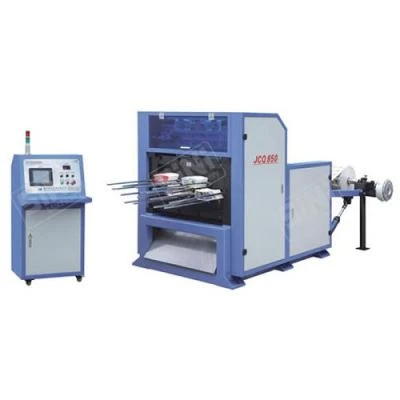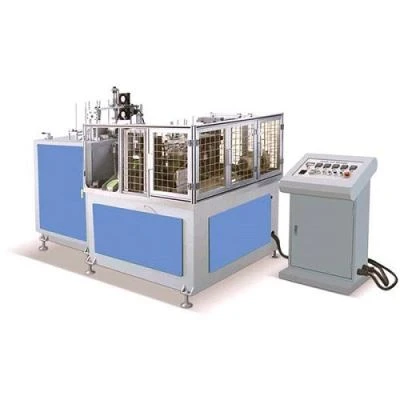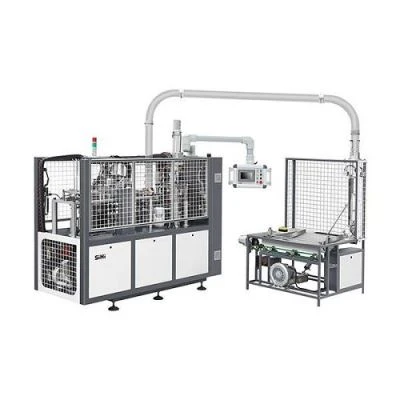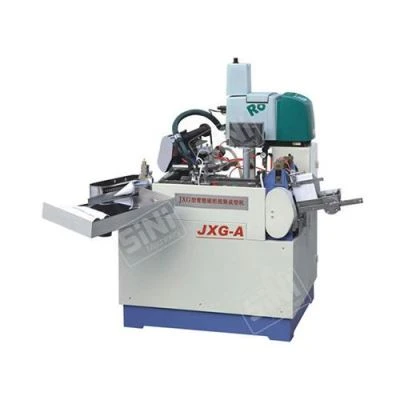
With the growth of the food delivery, food packaging, and disposable tableware markets, paper bowl production is increasingly trending toward higher speeds, automation, and precision. For manufacturers, while equipment output is crucial, the utilization rate of raw paper materials also directly impacts production costs.
During continuous high-speed paper bowl forming, issues such as inaccurate feeding, paper misalignment, poor mold matching, or high scrap rates can lead to significant material waste. Therefore, reducing paper waste is not merely about minimizing scrap; it is about maximizing the actual utilization of each sheet of paper through precise feeding, optimized layout, stable forming, and automated inspection.

I. Why is paper waste common in high-speed paper bowl production?
Raw material waste in paper bowl production stems from two main sources: scrap material generated during processing and defective products caused by equipment malfunctions.
Common causes include:
Inaccurate paper feeding position
Mismatch between paper size and equipment
Inefficient die-cutting layout
Paper misalignment during high-speed operation
Poor rim curling during forming
Unstable bottom sealing
Scrap generation during startup and adjustment phases
Reduced processing precision due to mechanical wear
Consequently, minimizing paper waste requires simultaneous control across multiple stages, including raw materials, the feeding system, and the forming system.
II. Precise feeding reduces paper waste
The feeding system plays a critical role in minimizing raw material waste in high-speed paper bowl forming machines.
Significant positional deviations each time the paper enters the processing zone can lead to inaccurate die-cutting or even prevent the paper from properly entering the forming station.
Modern paper bowl machinery often employs servo-driven feeding systems to precisely control paper transport length and positioning. For instance, some machines utilize servo-driven feeding assemblies combined with pre-feeding mechanisms to ensure the base paper enters the die-cutting station more stably.
Precise feeding helps the equipment:
Minimize feeding misalignment
Reduce the likelihood of paper jams
Decrease empty feeding cycles
Improve paper utilization rates
Reduce scrap caused by positioning errors
Therefore, when purchasing high-speed paper bowl forming machines, it is advisable to focus on the feeding method and feeding precision employed by the equipment. III. Properly Controlling the Die-Cutting Dimensions of the Bottom Paper
The bottom paper of a paper bowl typically undergoes die-cutting before being assembled with the bowl body; therefore, the dimensions of the bottom paper must precisely match the mold dimensions.
If the bottom paper is too large, it not only increases material consumption but may also interfere with subsequent bottom curling and sealing processes. Conversely, if it is too small, the seal may be incomplete, resulting in a defective product.
Some machines utilize servo-controlled feeding systems that synchronize the supply of bottom paper with the production cycle of the bowl body, ensuring the supply meets actual forming requirements. Certain machines are even designed to feed the bottom paper only after detecting the presence of a bowl body, thereby minimizing material waste caused by unnecessary feeding.
Consequently, the bottom paper dimensions, feeding length, and die-cutting precision must be carefully coordinated.
IV. Optimizing Paper Layout to Reduce Scrap
Beyond the equipment itself, the layout of the raw material significantly impacts paper utilization rates.
During die-cutting or punching operations, excessive spacing between product units leads to increased scrap material.
An optimal layout requires comprehensive consideration of the following factors:
Paper bowl dimensions
Unfolded dimensions of the bowl body
Bottom paper dimensions
Die-cutting mold structure
Spacing between products
Paper width
Paper roll specifications
For mass-production enterprises, paper dimensions and die layouts can be optimized based on primary product specifications, minimizing wasted areas while maintaining processing precision.
Some paper product forming processes also reduce scrap loss through multi-stage cutting and edge-trimming techniques. Production technologies for paper product blanks often optimize cutting methods to lower the scrap rate.
V. Stable Forming Processes to Reduce Defective Products
Raw material waste stems not only from cutting scrap but also from defective paper bowls.
For instance, defects such as:
Uneven rim curling
Poor bottom sealing
Bowl wall deformation
Paper cracking
Weak bonding
Misaligned bottom placement
...render the products unsuitable for subsequent packaging or sale, meaning the paper already invested in them becomes production waste.
Therefore, high-speed paper bowl forming machines must maintain stable coordination between various workstations. Processes such as paper feeding, preheating, sealing, bottom forming, rolling, and rim curling require a well-synchronized operational rhythm. Some machines use sensors to monitor the production process and automatically shut down when anomalies occur, thereby minimizing the volume of scrap generated by continued operation during a malfunction.
6. Reducing material waste during equipment setup
High-speed paper bowl forming machines typically require parameter adjustments whenever product specifications, molds, or paper materials are changed.
Excessive adjustment time can lead to a significant amount of scrap during test runs.
Therefore, the need for repeated test runs can be minimized by pre-setting parameters such as feed length, heating settings, forming positions, and rim-rolling specifications.
For enterprises that frequently produce paper bowls in various sizes, maintaining a database of machine settings for different products allows for rapid adjustments when switching specifications.
This approach not only reduces paper waste during setup but also minimizes equipment downtime.
7. Sensor detection prevents unproductive manufacturing
Automated detection is another key method for reducing raw material loss.
If a machine continues to operate at high speed despite issues such as paper shortages, jams, feeding irregularities, or other production problems, it may continuously produce defective goods.
Sensors and control systems enable the timely detection of anomalies and the immediate halting of relevant operations.
Some automated paper bowl machines utilize sensors to monitor production and incorporate automatic shutdown functions to limit scrap generation during malfunctions.
This is particularly critical for high-speed equipment, as higher operating speeds can result in a greater volume of waste per unit of time during abnormal conditions.
8. Regular maintenance reduces material loss
Prolonged operation can cause wear on components such as feed rollers, guides, molds, and other mechanical parts.
Continuing to use worn feeding components can lead to issues like paper slippage, inconsistent feed lengths, or positional misalignment.
Therefore, regular inspections are necessary for:
Feed roller wear
Guide mechanism positioning
Mold precision
Punching/cutting tool condition
Sensor functionality
Mechanical connections
Lubrication systems
Timely maintenance helps reduce the number of defective products caused by a decline in machine precision.
9. Selecting the right paper is also crucial
Reducing waste does not simply mean opting for thinner or cheaper paper.
Factors such as paper basis weight, thickness, stiffness, coating structure, and surface properties all influence feeding and forming performance.
If the paper is incompatible with the equipment, issues such as feeding difficulties, cracking during forming, or unstable sealing may occur. Some current paper bowl machines support a range of single- or double-sided PE-coated papers, but the specific compatibility depends on the machine model and production process.
Therefore, when purchasing equipment, you should provide the specifications of the paper you plan to use so the manufacturer can confirm the machine's compatibility range.
X. How can paper waste be reduced from a holistic production perspective?
Paper bowl manufacturers can establish a raw material control system by focusing on the following areas:
Selecting equipment with high feeding precision
Optimizing paper layout and die-cutting patterns
Determining bottom paper dimensions rationally based on product specifications
Using stable servo feeding systems
Configuring anomaly detection and automatic stop functions
Reducing equipment setup and adjustment time
Regularly maintaining feeding and forming mechanisms
Adjusting production parameters based on paper characteristics
Conducting statistical analysis on scrap and defective products
Through these measures, "reducing paper waste" shifts from being merely an equipment issue to a cost-control matter involving the entire production process.
FAQ
Why do high-speed paper bowl forming machines cause paper waste?
Common causes include feeding misalignment, inaccurate die-cutting dimensions, inefficient paper layout, equipment setup/adjustment, and the production of defective items during the forming process.
Can servo feeding reduce paper waste?
Yes. Precise servo feeding controls feed length and positioning, reducing wasted movement and scrap caused by feeding deviations.
How can paper bowl forming machines reduce bottom paper waste?
Waste can be reduced by precisely controlling the feed length of the bottom paper, optimizing die-cutting dimensions, and synchronizing the bottom paper feed with the bowl body forming cycle.
Does higher machine speed result in higher paper utilization?
Not necessarily. If feeding, forming, and detection systems cannot maintain stability at higher speeds, the rate of defective products may actually increase. Therefore, production speed must be balanced with equipment stability.
Summary
Reducing paper raw material waste in high-speed paper bowl forming machines requires control across multiple stages, including precise feeding, efficient layout, bottom paper die-cutting, stable forming, automatic detection, and equipment maintenance.
For investors and buyers, the equipment selection process should not focus solely on "production output (bowls per minute)"; factors such as feeding precision, paper compatibility, waste control methods, sensor configuration, and long-term operational stability are equally important. Only by improving paper utilization while ensuring product quality can the production cost per unit truly be reduced.