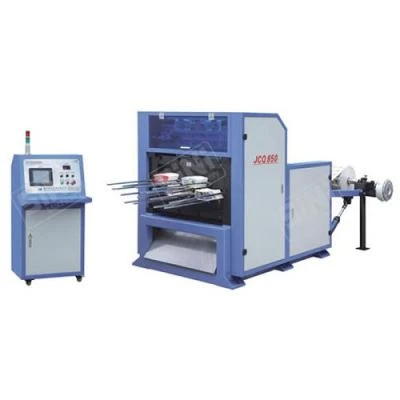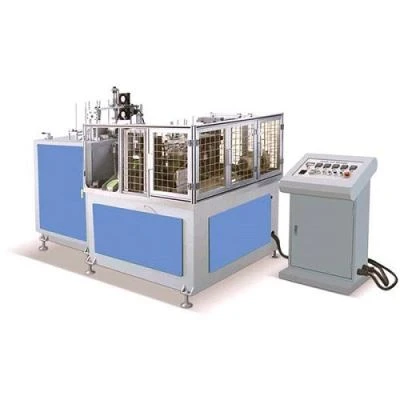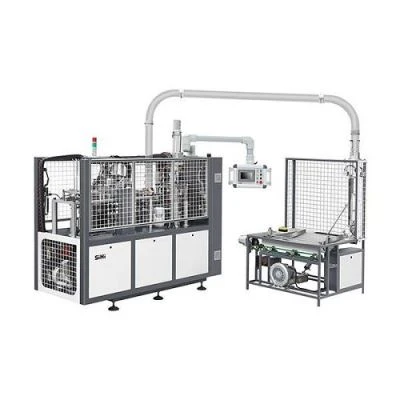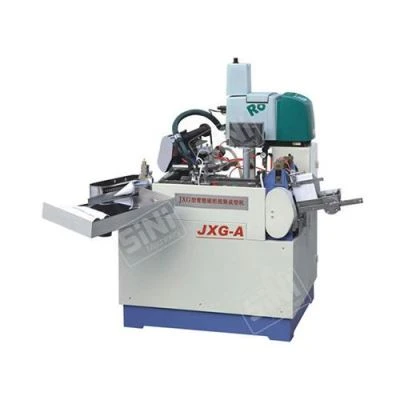
High-speed paper bowl molding machine is a kind of automatic equipment used to continuously produce paper bowls food containers such as paper bowls, soup bowls and instant noodles bowls. Throughout the system, the feeding mechanism-albeit at the front end-directly affects the continuity of subsequent processes, such as shaping, sealing, bottom curling and edge curling.
Simply put, the paper feeding system is responsible for the steady delivery of paper to the molding station at precise locations, orientations and intervals, ensuring a continuous and accurate supply of materials for subsequent processing. If the paper feed is unstable, even if other parts of the machine perform well, problems such as paper jams, material shortages, dislocation, poor forming quality and reduced productivity can occur.

I. What is the high-speed paper bowl machine paper feed system?
paper feeding system is the internal machinery responsible for the transport and location of paper, it usually operates in coordination with the storage, collection, transport, positioning and forming mechanisms paper.
Depending on the design of the machine, the feeding mode is different. It can be mechanically clamped, vacuum suction, transport rollers, servo drive or other automatic feeding structures. Some high-speed paper cup and bowls employ multi-station rotary feeding mechanisms, allowing paper to enter the next molding station at a steady pace.
In paper bowl production, paper feeding's not merely a matter of "pushing the paper forward"; it's also about controlling the speed, location, orientation and timing (cadence) of the feed.
II. What are the main functions of a paper feeding system?
1.Ensure a continuous paper supply
High-speed paper bowl forming requires continuous coordination of multiple processes, and if paper supply is delayed, gaps may occur in subsequent molding mechanisms.
By providing continuous feed, the system maintains a steady production rhythm of the machine, thus minimizing the impact of frequent manual paper loading on the production process.
For automated production lines, a steady supply of material is the basis for continuous production.
2. Improve the accuracy of feed position;
Once the paper enters the molding station, it must be in exact position with the mold, fixture and other components.
If the feed is not in the correct position, the paper may be misaligned during molding, which may affect the quality of the curls on the sides, bottom and edges of the bowl. As a result, paper feeding systems often require to be combined with positioning or guidance mechanisms to ensure that paper remains in a relatively stable position before moving on to the next processing stage.
3. Cooperate with the production cycle of high-speed equipment.
High-speed paper bowl molding machines do not perform a single, isolated action, but multiple stations coordinate their work based on a fixed production cycle.
For example, some high-speed paper cup or bowl machines seamlessly connect to processes such as paper feeding, bottom preheating, curling at the bottom, rolling, curling at the edges, and bowl discharge.
Therefore, the paper feeding speed must match the speed of the host.
If the feed is too slow, the device will experience free time; if the feed is too fast, there will be paper overlapping, dislocation and even paper jams.
III. How does the paper feeding system affect the quality of the moulded paper bowl?
The influence of paper feeding system on the quality of paper bowl is mainly reflected in three aspects: location, orientation and continuity.
First, the paper has to be in the correct position. If the paper is not aligned properly, the subsequent forming molds cannot be accurately applied to the paper material.
Second, the orientation of the paper must be consistent. For paper that has been printed or has a specific coating structure, incorrect feeding orientation may affect the appearance and performance of the final product.
Finally, the feeding process must be continuous. During this process, pausing, sliding or feeding multiple plates at once may lead to the formation of defects.
Thus, the paper feeding system determines not only "the existence of paper" but also "whether paper goes to the next stage."
IV. INTRODUCTION What are the common paper feeding methods for high-speed paper feeding molding machines?
Different machines adopt different feeding methods according to their structural design and production requirements.
Common configurations include:
Mechanical clamping feed
Suction-based feeding
Conveyor roller feed
Servo-driven feeding
Rotating supplies
Navigation locator feed
Some paper cup and bowl machines use suction or mechanical conveyance to transfer paper blanks to subsequent molding positions. The machine's structure often shows coordination between paper pickup, transport platforms and positioning mechanisms.
For high-speed equipment, the mechanical response speed, positioning accuracy and synchronization capabilities of feeding mechanism with the main control system are very important.
V. Why do high-speed paper bowl molders require stable feeding control? At high speeds, the device repeats itself so much every minute that the feeding system widens over time for even the slightest error.
For example, if there is a slight deviation in position during each feed cycle, serious forming errors may occur after a period of continuous production.
Stable feed control helps equipment:
Minimizing feeding bias
Reduce the likelihood of paper jams
Minimizing airdrops and material shortages
Strengthening continuous operational capacity
Reduce scrap rate
Increase paper utilization
Some paper bowl machines use servo-driven feeding mechanisms and motor to achieve precise control of feeding motion. For example, some models combine servo-driven paper feeding assemblies with pre-feed units to improve the stability of the substrate supply.
VI. INTRODUCTION What are the factors affecting the stability of the paper feeding system?
The stable operation of the paper feed system depends not only on the mechanical structure of the paper feed system, but also on the paper feed system itself and the equipment's operating parameters.
1. Paper thickness and material
Different base weight, thickness and coating structure of paper lead to different stiffness, frictional characteristics and bending properties.
If equipment parameters do not conform to the characteristics of the paper, there may be non-standard paper feed.
2. Paper Size
The dimensions of the billet must be consistent with the feed channels, clamping mechanism and molding die.
Too large a size error can affect the feed positioning.
3. Feed Speed
Feed speed must be synchronized with the cycle time of the host.
High-speed production not only increases feeding speed, but also requires feeding action process to be in precise synchronization with other processing stations.
4. Mechanical wear
feed rollers, clamp and guide rail are easy to wear during prolonged operation.
Serious wear and tear will lead to a gradual decline in feed accuracy and necessitate regular inspection and maintenance.
VII. How to choose the paper feed system for high-speed paper feeding molding machine?
When buying equipment, buyers should go beyond the machine's nominal production speed and focus on the actual configuration of the paper feeding system.
Key questions to ask include:
What feeding method are used?
Does it support automatic continuous feed?
How accurate is the feed?
Does that include servo control?
Does it have paper testing?
Will it fit different paper sizes?
Is it easy to switch between paper specifications?
Is the feeder easy to maintain?
Is the feed stable at high speed? Does the machine have an alarm or the ability to turn off automatically if a paper jam occurs?
In addition, you must provide the device manufacturer with specifications for the actual paper used-including basic weight, thickness, size, and whether it has a coating (such as PE) -to verify compatibility with the machine.
VIII. What are the common signs of problems with the paper feeding system?
In actual production process, the paper feeding system malfunction usually shows obvious symptoms.
For example:
Paper fails to enter molding station correctly
Frequent "paper" errors
Give multiple sheets of paper at once.
Dislocation or displacement of paper
Paper clogs during feeding
Inconsistent machine operating cycle
Dimensional deviations of molded paper bowls
Significant increase in waste rates;
When encountered with these problems, inspect the paper itself, feed mechanism, positioning device, transmission system, and control parameters; do not simply assume that the problem lies molding mold.
IX. Key points of paper feed system for high-speed paper feeding molding machine
Develop a maintenance schedule in accordance with the equipment manual to ensure stable operation of the equipment in the long term.
In daily production, key inspection paper feed mechanism, check paper scrap accumulation, transmission components wear, positioning parts looseness and so on.
At the same time, keep the feeding area clean to prevent paper scraps and dust from interfering with mechanical movement.
For equipment utilizing servo motors, sensors or automated control systems, the operation of electrical connections and detection components shall be regularly inspected.
Correct maintenance can not only reduce feed malfunction, but also maintain feed accuracy in long-term operation.
Frequently Asked Questions
Is the paper feed system of high-speed paper bowl molder important?
Yes, it is vital. paper feeding system is responsible for the continuous and accurate delivery of paper to subsequent molding stations, whose stability directly affects the continuity of production and molding quality.
Can paper feed be as fast as possible?
No. The feed speed must match the machine's overall production cycle. Simply increasing the speed of paper feed can lead to paper misalignment, overlap or blockage.
Can the paper feeding system adapt to different paper specifications?
Some machines support a variety of paper specifications, but the actual range depends on the feeding mechanism, mould and equipment design. Before you buy, you should confirm the exact paper dimensions and basic weight range.
What's the servo feed? Servo-driven feeding can be precisely controlled to ensure that feed positioning is accurate and synchronized with the running cycle of high-speed forming equipment.
What to do if the paper feed system gets jammed?
First, stop the machine and check the paper dimensions, feed path, guide components and feed rollers areas. Solve paper deformation, component wear, or positioning errors before restarting the machine.
Abstracts
The paper feed system of high speed paper bowl molding machine is the key link of connecting raw material and the forming process, which is mainly responsible for continuous supply, accurate positioning and stable paper feed. In high-speed production environment, the accuracy and stability of feeding system directly affect forming quality, equipment efficiency and raw material utilization.
Therefore, in the selection of high-speed paper bowl molding machine, should exceed the production speed, paper bowl specifications, price and other factors, carefully assess feeding method, feed accuracy, automation, paper compatibility, maintenance and so on. Only when the feeding system operates in a stable and coordinated manner with each station of the machine can the production potential of the equipment be fully realized.