Billions of paper cups are consumed every day in coffee shops, fast-food restaurants, offices and households as one of the world's most widely used disposable beverage containers. Although paper cup may look simple, its manufacture involves the coordination of multiple precision steps, including the processing of raw materials, printing, die-cutting, molding and curling at the bottom. Understanding the complete manufacturing workflow helps packaging professionals optimize production management and enables procurement personnel to evaluate product quality more scientifically. This paper gives a systematic overview of the entire production chain from the original paper to the finished paper cup.

I. Raw Materials: cardboard for paper cups
The core raw material of paper cups is substrate (also known as single-sided or double-sided PE coated paper), which is a composite of food-grade virgin pulp paperboard and polyethylene (PE) film. PE coating provides water and oil resistance to allow beverages to seep into cardboard, causing cups to collapse or leak.
Specifications of substrate vary according to use:
Cold Cups: Paperboard (inner wall) coated with single-sided PE, with a base weight of between 155 and 210 g/m2.
Hot Cup: Double sided PE coating is required to prevent the paperboard and PE layers from separating due to high temperatures; base weight is usually between 190g and between 190 and 300 g/m2. Some high-end products use polylactic acid (PLA) coatings instead of polyethylene to improve biodegradability.
The quality of the substrate directly affects the leakage resistance, rigidity, printing and molding accuracy of the cup, which is the foundation of the whole production process.
II. Printing process
The design of the printing cup is carried out before the base paper is formed. Common methods include web offset or flexo printing, where brand graphics, nutritional information and barcodes are applied to the outer surface of cardboard (without PE coating).
Offset printing is ideal for intricate designs and multicoloured speckled prints, offering high color fidelity; it is often used by coffee chains and premium beverage brands, which prioritise visual brands. Flexographic printing is more suitable for mass production, fast production speed, less investment in equipment, flexible plate changes, is the mainstream choice for small and medium-sized cup manufacturers. After printing, the paperboard needs to go through thorough ink drying and curing to enter the next phase, which can prevent residual solvents from harming food safety and avoid ink stains during die-cutting and molding.
III. Die-cutting
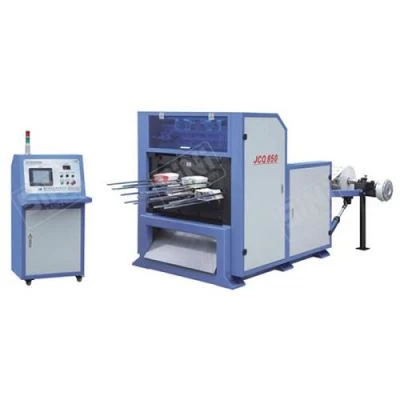
Printed paperboard rolls or pieces of paper go into a die cutter and are cut into fan-shaped blanks. Instead of being rectangular, the side wall of the cup The unfolded shape in an exact fan shape; the curvature parameters of this fan determine the cup's final taper and volume.
The die-cutting process must be accompanied by the following:
Contour cutting: Cut the paperboard into precise fan shapes.
Reduce: Pre-press the crease of the cup rim area to facilitate the subsequent rolling process.
Removal of waste paper: Removal of excess cardboard debris between fan billets.
Die cutting accuracy directly affects the quality of the forming cup. If the size deviation of the section blank exceeds the allowable limit, defects such as uneven weld seams, body distortion or leakage may occur during the molding process; consequently, the accuracy of paper cup die-cutting is generally required to be within ±0.15 mm.
IV. INTRODUCTION Cup Body Forming Process
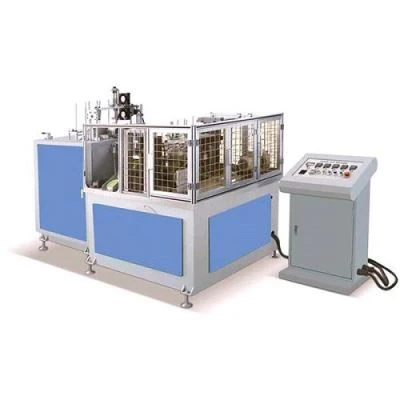
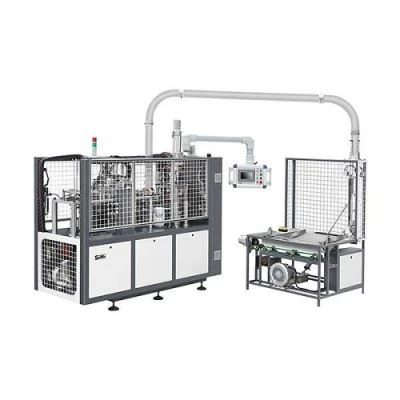
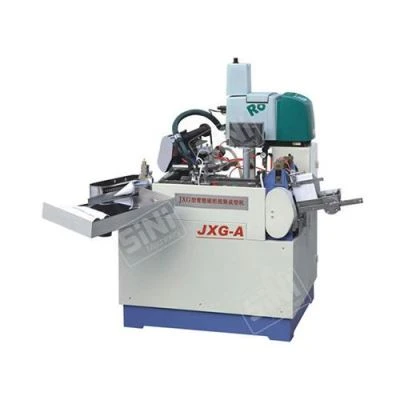
After the fan billet enters the paper cup forming machine, the following key steps are needed to complete the automatic forming of the paper cup body:
1. Feeding and rolling
The robotic arm takes a scalloped blank from the hopper and a forming mandrel (a conical steel core) quickly wraps the flat cardboard into the conical profile of the cup.
2. Side Seam Heat Sealing
Adhesive side seam are the first critical step in ensuring that paper cup do not leak. There are currently two main processes:
Hot air seal: The hot air heats the PE layer at the seam to a molten state and adheres and solidifies under pressure; this provides a stable sealing effect and is the most common side seam bonding process.
Ultrasonic welding: Ultrasonic vibrations produces frictional heat, fuses PE layer, fast, suitable for high-speed paper cup production line.
3. Bottom blanking and bottom curling
Circular paperboard blanks (bottom discs) used for the bottom of the cup is continuously punched out by a special die cutter and immediately sent to the bottom curling table. Here, the bottom edge of the cup folds inwards, connecting to a mandrel and the edge of the bottom disc, subsequent heat sealing and compression to create a secure, leak-proof base structure. The quality of the bottom curling process directly determines the leakage resistance of the cup and represents the most demanding stage in the process.
4. The rim of the cup curls;
The upper edge of the cup is rolled outwards through a curling device to create a smooth circular rim (curl). In addition to improving drinking comfort, the curling process significantly enhances the structural strength of the rims, preventing cup from being caught when deformed.
V. Inspection and Quality Control
After paper cups is formed, it goes through a rigorous quality inspections and then goes into the packaging stage:
Appearance check: Check the integrity of the printing, neatness of the seams, uniformity of the edges, cracks or deformation of the cup.
Seal integrity test: Fill the glass with water, leave for a period of time (usually 30 minutes to 1 hour) and check the bottom and side seams for leaks.
Hygiene and safety testing: Tests are conducted to the standards of food exposure materials (e.g. GB4806 series) to measure PE coating migration, fluorescent residue and ink safety to ensure compliance with food safety requirements.
Dimensional inspection: check that rim diameter, base diameter, cup height and volume are within specified tolerances.
VI. INTRODUCTION Packaging and shipping
After the paper cups have been inspected and qualified, they are counted and stacked automatically, then packaged in standard units in plastic bags or shrink-wrapped bags before being packed in outer boxes, trays and shipped. Paper cups should be moisture-resistant during storage and transport, and warehouse temperature and humidity should be maintained within prescribed limits to prevent moisture absorption and deformation of paper cups and PE coating adhesion.

Frequently Asked Questions
Question 1: What is the cause of the leak in the rim of the paper cup?
A: Side seam leakage is usually caused by inadequate thermalsealing temperature, which prevents the PE layer from fusing properly; uneven sealing pressure, which results in poor adhesion in some areas; inaccurate scalloped rough cutting, which results in inadequate seam overlap; or pinhole defects in the substrate PE coating. If mass leakage occurs, heat seal temperature, pressure parameters and substrate mass should be systematically checked.
Can paper cups be used interchangeably for hot and cold drinks?
A: Interchangeable use is not recommended. Hot drinks mugs have a high temperature resistant double-sided PE coating (typically ≤85°C), while cold drinks mugs only have PE coating on their inner walls; prolonged storage of hot drinks in cold drinks can cause the outer paperboard to absorb moisture and soften, affecting the structural integrity and safety of the mugs.
Q4: Is the weight of paper better?
Answer: Not necessarily. Higher grammage means more basic paper usage, which usually leads to better rigidity and insulation, but also increases costs. The temperature, volume and usage of the beverage should be taken into account in the selection, and choosing grammars suitable for functional requirements can help avoid unnecessary waste.